
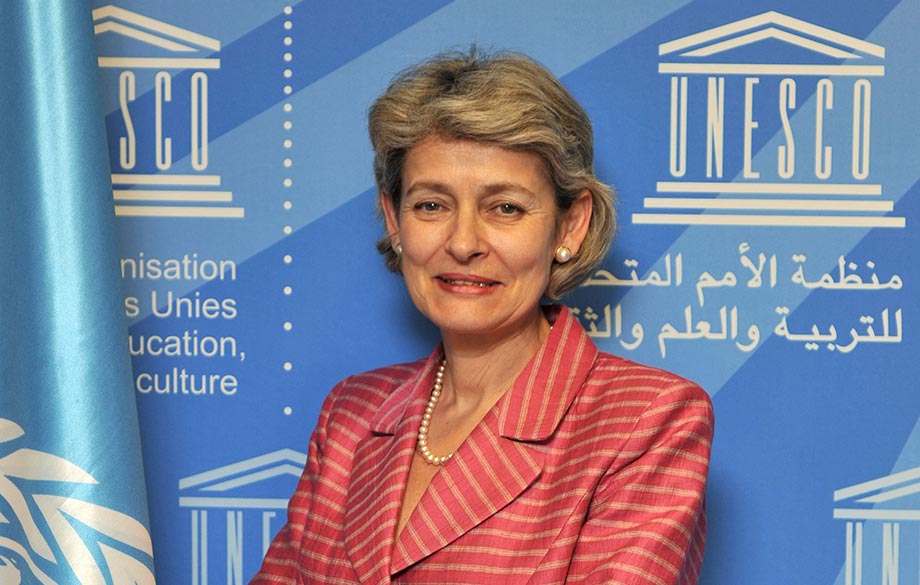
Interview with Mrs. Irina Bokova, Director-General of the United Nations Educational, Scientific and Cultural Organization – UNESCO
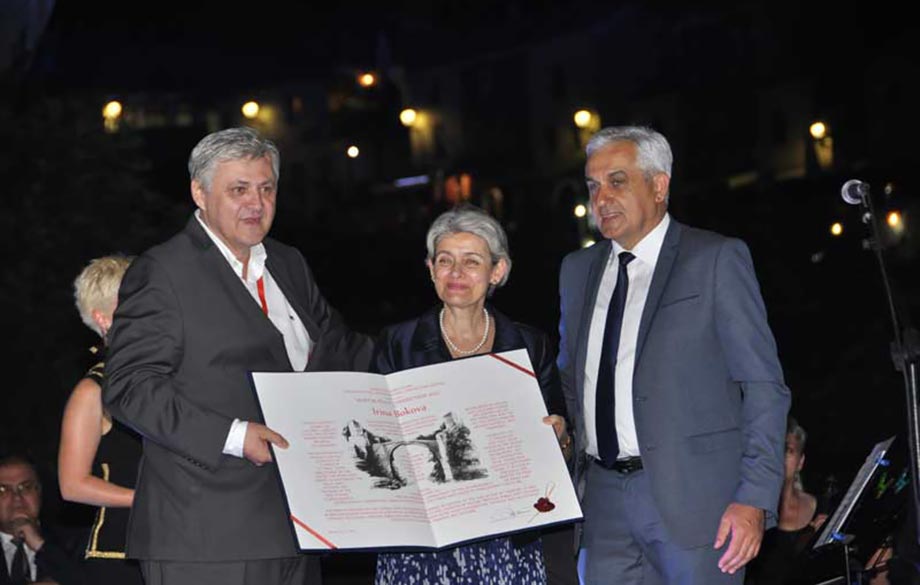
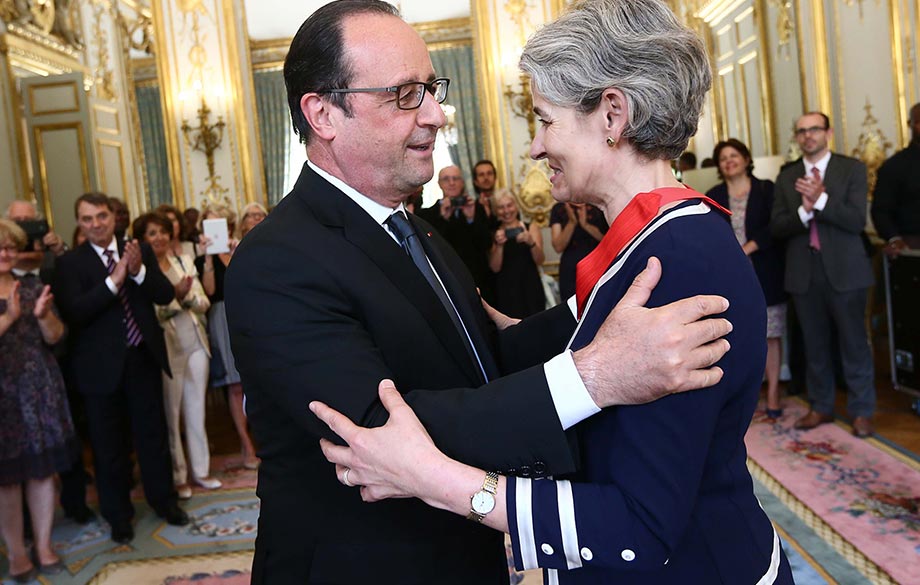
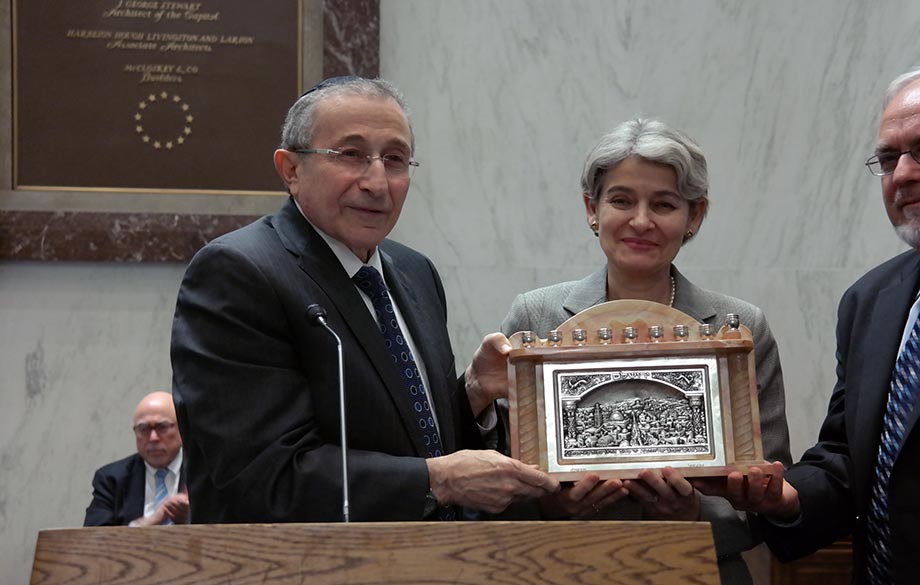
The name of that Bulgarian at the moment is perhaps the most often cited for the post of Secretary General of the United Nations (UN), whose election will be in 2016. This is not accidental. Her extraordinary erudition, her huge managerial and political experience on a global level, her remarkable diplomacy are just some of the qualities for which the world respects her. For these qualities and achievements Irina Bokova - Director General of UNESCO, received recognition in 2015. In July, she was awarded the prestigious Peace Prize of Mostar. Days later, at the Elysee Palace, the French President Francois Hollande handed her the prize Commander of the Legion of Honour – for her great merit in the fight against illiteracy and fanaticism, for her efforts to empower women and girls through education, for her work for the conservation of the cultural heritage particularly in countries in conflict - Syria, Iraq and Mali. In November, Irina Bokova was awarded a special prize of the international Jewish human rights organization "Simon Wiesenthal" in the Capitol, Washington. In December in St. Petersburg she became an honorary member of the Russian Academy of Sciences ...
- Ms Bokova, in 2015 the organization you lead celebrated its 70th anniversary. You have been described by western media as the woman who managed to reform UNESCO. What have you done and what is yet to be reformed?
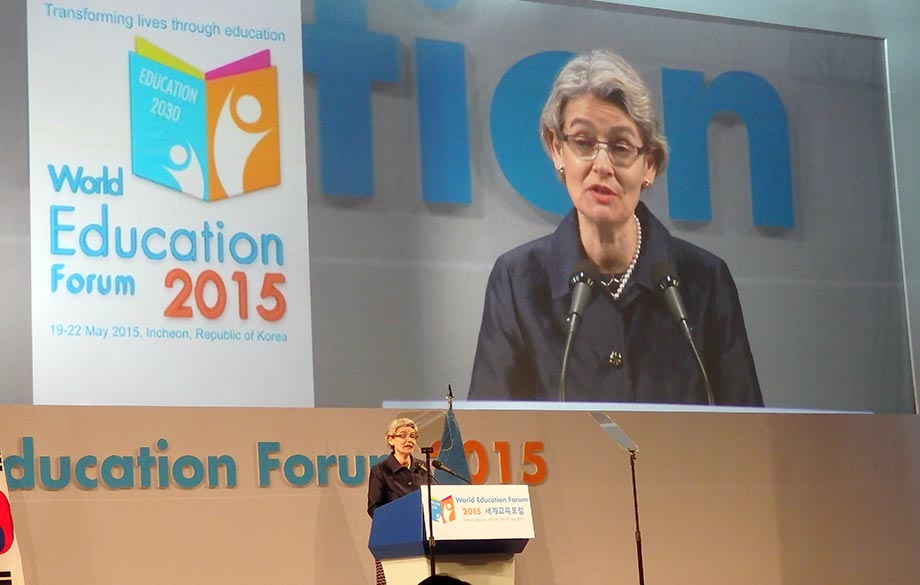
- The reform of UNESCO, which I started as soon as I was elected in 2009, and which was triggered by financial difficulties the organization faced a little later, was aimed primarily at making it closer to its mandate, more adequate to what happens in the world, its problems, challenges, expectations and more efficient in terms of spending of financial resources. In practice, I reduced the administrative costs, I would say dramatically, so that more resources could be directed to programs, I reformed the presence of UNESCO in the world - now we have regional and national offices in over 53 countries, I made it possible for the organization to become a leader in the core areas of its activities. Here I have in mind the World Education Forum in 2015 in South Korea, where we practically outlined Objective 4 of the Agenda of the United Nations for Education for Sustainable Development, and culture as one of the main engines of development as well as everything else connected with our mandate.
- Was the opening of the Regional Centre for Safeguarding of Intangible Cultural Heritage in Southeast Europe in Sofia part of these changes?
- This, of course, was one of my ambitions as a Bulgarian - Director General of UNESCO. The initiative to establish a regional center, however, started when I was Permanent Representative of Bulgaria in the organization. In 2008, Sofia hosted a meeting of the Committee of Intangible Heritage, which I had the honor of chairing. Then this initiative was launched by President Parvanov. One of the first things I wanted to do as Director General of UNESCO, was to create this regional office. It is a natural expression of the richness of Bulgaria, the Bulgarian folklore, traditions, verbal creativity, everything that Bulgarians have as a spirit, identity and of course, our openness to the region and the world. And I am glad that the office here works, that it has created very serious network in the region and already makes contribution. I realized this on 12 December, when I attended a regional conference in Sofia dedicated to the 70th anniversary of UNESCO, with which the region marked this important anniversary.
- An international group of experts is currently working on a new history of UNESCO, based not only on ideas for a better world, but also on their implementation and their application in practice. Could there be a result in our turbulent times?
- The question is very interesting, because, as we said, we just celebrated our 70th anniversary. 70th anniversary of an organization that has given so much to the world. We often forget or take for granted the things that surround us, but that did not exist before UNESCO was established. I mean the cultural heritage. Can we imagine the world today without the World Heritage Convention? A great idea that unites people around the world as nothing else. As an example I will give the Boyana church, which we all know from childhood and which is a symbol of the Bulgarian spirit. This small graceful church with magnificent frescoes, which, as we all know, are from the beginning of the European Renaissance, is so significant that all humanity stands behind it as it represents an exceptional cultural value. So everyone in the world interested in culture, in history, wants to keep and preserve it.
Or, if a cultural monument is destroyed, as it unfortunately happens today, with the extremism, such as Palmyra, Nimrud or Hatra, we all suffer, we all resent. This is the idea of UNESCO.
And now - the recent history of UNESCO. This is according to me the story of how through culture, education and science to assist in solving the problems in today's turbulent world of growing conflicts, of still existing poverty in many parts of the world, of intolerance.
- Last year, thanks to your active role, Resolution 2199 of the United Nations Security Council to protect the cultural heritage of Iraq and Syria was adopted, supported by the United States and Russia. Yet the devastation continues. Is there a way out?
- A very difficult question. I myself have often set it, and I wondered what else we can do. What happened and is happening in Syria and Iraq, what I have called a cultural cleanup, as I do not see how else to call it, is a great drama, a great tragedy for the whole world. Because culture and history are shared. The Middle East is the cradle of our civilization, it is the crossroads of different cultures. And if Palmyra caused so many reactions and the attempts to destroy it led to such great indignation, it is because it really is a crossroads of Persian, Asian, Byzantine, Roman and local cultures. The question today is if we could integrate culture to a greater extent, if we could make the politicians, the strategists, those dealing with the problems of peace and security do something. And the fact that the Security Council has started dealing with these issues is a proof that such understanding exists.
The other, darker, more hidden side – is the traffic of cultural goods, which finances extremism. This is also an issue that concerns us very actively. We work with Interpol, with many governments, with museums, with the private sector, with collectors and I think we have achieved quite a few. More than 35 countries in the world within just one year changed its legislation or strengthened their institutions, created other mechanism of information exchange and cooperation between departments - police, intelligence, and judicial investigation, to allow this traffic to be limited and stopped.
- Isn’t in fact the militant extremism an act of propaganda of hatred? How can we deal with it, isn’t it already in the minds, in the souls of part of the people. Could we at least get back to the state, which existed before the crisis?
- What you say is exactly the position that I share. These conflicts, these problems cannot be solved by military means alone on a more lasting basis. We speak about people's minds. There is a war at the moment, a battle for the minds and hearts of people, especially those of the young. In this respect, education, rejection of the speech of hatred have very big role. It was not a surprise that when President Barack Obama called a large meeting during the session of the UN General Assembly in September last year on the fight against militant extremism, I was the only head of an organization of the UN system, invited to attend and to speak precisely on education and how to educate young people in a spirit of tolerance, respect for others, understanding. Because globalization, new technologies are unfortunately often used for the purpose of radicalization and in attempt to impose the speech of hatred. UNESCO plays a big role in combating this trend. During our General Conference we convened the first ever Conference of Ministers of Education. It was attended by 80 ministers who discussed the topic of how to fight militant extremism through education.
- The language of hatred has become a very topical issue in our country. See what happens in Germany as well ...
- There is an unprecedented situation in the world - more than 60 million refugees. Only in 2015 almost every day 140,000 people have left their homes. And of course, Europe as a model of democratic development, of social and economic prosperity, attracts them. We speak not only of refugees from Syria and Iraq, but also of people from other regions. There is a threat that people might not accept the other. After the first enthusiasm and compassion that are very natural, one can go in the opposite direction. This is a very worrying trend. People need to be prepared, there should be a common understanding. But the laws of each country must be strictly observed as well. Not to mention that the radicalization of young often leads to horrific acts of terrorism as we saw in Paris last November. A sense of tolerance and understanding has to be established within the frames of the law.
- The Climate Change Conference was held in Paris at the end of the previous year, of which UNESCO was co-organizer. Did you manage to achieve the results you expected?
- It really was a great success. And we must give credit to France, the French diplomacy, the President, because they made this success possible - with a lot of work, with a lot of diplomacy, involving all parties in the process.
- Months ago, you presented the program "Empowering Adolescent Girls and Young Women Through Education" aiming at removing the still existing gender gap in education ...
- Equality of women, their empowerment runs without doubt through education. We can not talk about opportunities for millions of women worldwide, and their equality when they are illiterate. Worldwide, there are 58 million children who do not attend school, the majority of them are girls. I'm talking about primary education, on the next stage this figure is bigger. Many girls stop their education at the age of 10-12. This is a very tender age, sensitive, where educational and health problems are crucial. At this age, many girls become pregnant or get married. So I think that our Organization - UNESCO, a leader in the field of education, should put as a top priority the education of girls. This was the reason to launch with Hillary Clinton, when she was US secretary of state, the Global Partnership for Girls’ and Women’s Education. And I was very happy because it was the first US secretary of state, who visited UNESCO, and we saw that recently John Kerry came to us as well.
Recently, together with the Organization of Women at the United Nations and the Population Fund, we designed one great program for the education of young girls and now we start working very actively on it.
- Bulgaria also enriches this sad statistics ...
- Unfortunately. That is why education has an important place in the adopted Agenda for Sustainable Development of the UN, which is universal and is not directed only to developing countries. There are criteria that affect all countries, including European ones. So I think that our role in this respect is very important.
- What are the changes in the global cultural landscape ten years after the adoption of the Convention on the Protection and Promotion of the Diversity of Cultural Expressions?
- This is a very interesting convention for the development of the so-called cultural industries and the creative economy. It stimulates the role of culture in the development of each country. Last year we celebrated ten years of its adoption. We at UNESCO are convinced that culture is not a commodity like any other. Culture is linked to identity, to the development of creativity, variety, linguistic diversity. We are convinced that encouraging the development of national cultures, the world supports its cultural diversity, in order not to become at one point a single culture of consumption.
And besides culture contributes much to the development of economies. According to our data, it is the fastest growing economic sector in the world. In many countries, the percentage of revenue from culture is a two digit number. Nearly 30 million people worldwide are employed in the cultural sector - more than those employed in the automotive industry. In emerging economies - China, India, Indonesia, Brazil, cultural industries are growing very quickly. From this perspective, our thesis is that investments in culture are perhaps one of the best. There is a very wide range of cultural industries that are booming and we want to support them.
- "The free flow of ideas by word and image" is the motto under which UNESCO seeks to encourage the development of free, independent and pluralistic media. But the media are becoming more dependent worldwide. How do you think we could achieve freedom of expression and independence?
- In today's world this topic is also discussed. UNESCO is the organization that fights for, that disseminates, suggests, insists and declares the importance of freedom of expression, of free, independent and pluralistic media. This is part of the democratic and sustainable development of each country. Last year we published a report on the global trends in media development. On the one hand we think that freedom of speech and of the journalists must be guaranteed in legislation, that we should be working to create opportunities for pluralistic media. New technologies and Internet help a lot. But on the other hand, we believe that there should be ethical norms and standards to naturally regulate the work of the media. We are trying to study these new trends and in fact this report, which we published, will now be developed in detail in distinct areas.
- Your nomination for the post of UN Secretary General is perhaps the strongest. How far did the procedure go?
- Officially it was launched recently by the United Nations General Assembly and the Security Council. I, of course, feel responsible because there is decision by the previous Bulgarian government, confirmed by the Prime Minister and the Foreign Minister. We are in the final and I expect soon the government to inform the General Assembly and the Security Council for my application. I feel great responsibility, because at the moment the world is indeed facing many crises, there are many issues - of development, poverty, climate change, of the changing geopolitics and need for a greater understanding, dialogue between cultures and tolerance, for which the United Nations has contributed.
- What in your opinion is the thing that can unite the 193 member states of this organization?
I believe in multilateral diplomacy. I am convinced that in the world there is no other platform and no other organization that could bring together 193 countries. I think the need for more diplomacy comes back and it was seen in the negotiations between Iran and the countries that participated in them, we see it in the efforts to solve the Syrian crisis. I think there is no other way to resolve these crises on a lasting basis. Conflicts and wars in our time are not the ones we know from the past. These are not the traditional conventional wars between states. These are conflicts that are within societies and to solve them we need more diplomacy. This can be provided by the United Nations only.
|
|
Photos: Copyright UNESCO
1. Mrs. Irina Bokova with the mayor of Mostar Mr. Ljubo Beslic and the Director of the Centre for Peace Safet Urshevich obtaining the prestigious Peace Prize of Mostar for 2015
2. The President of the French Republic François Hollande hands over the award Commander of the Order of the Legion of Honour to Mrs. Irina Bokova at a ceremony at the Elysee Palace.
3. With Rabbi Marvin Hier, founder and dean of the Simon Wiesenthal Center in the Capitol, Washington, where she was awarded a special prize of the international Jewish human rights organization.
4. At the opening of the World Forum for Education in 2015 in South Korea.


