

On the occasion of the Day of Saints Cyril and Methodius, the Embassy of the Slovak Republic in Sofia hosted a reception at the embassy on June 25, 2026.
The event brought together prominent representatives of Bulgaria's political life, the diplomatic corps, the academic and educational communities, the business sector and the media, as well as members of the Slovak community in Bulgaria and friends of Slovakia.
Welcoming the guests, H.E. Mr. Vasil Grivna, Ambassador Extraordinary and Plenipotentiary of the Slovak Republic to the Republic of Bulgaria, recalled the mission of Saints Cyril and Methodius, through which the Christian faith, literacy and the foundations of culture became accessible to the Slavic peoples in a language they could understand. He noted that the Cyrillo-Methodian heritage remains a lasting symbol of education, dialogue and mutual understanding among nations.
The ambassador emphasized that although the Slovak Republic, as a relatively young state, has six national holidays, it is the Day of Saints Cyril and Methodius that creates a unique bond between Slovakia and Bulgaria. He also recalled historical events reflecting the close ties between the two countries: "After the death of Saint Cyril in Rome in 869, where he is buried in the Basilica of San Clemente, Methodius continued his mission in Great Moravia as an archbishop. Following his death in 885, the influence of the Frankish Empire and Western Christianity became increasingly dominant in our territories. The disciples of Cyril and Methodius were forced to leave, and many of them found refuge in the then Bulgarian Empire. There, they established important literary and educational centers, particularly in Ohrid and Preslav. It was in this environment that the Cyrillo-Methodian tradition further developed, and from the original Glagolitic script emerged the Cyrillic alphabet – a writing system still used today by many East Slavic peoples.
Despite these historical developments, the memory of Saints Cyril and Methodius endured and became an inseparable part of Slovak historical memory. Its significance is further confirmed by the fact that the Cyrillo-Methodian heritage is explicitly enshrined in the Preamble of the Constitution of the Slovak Republic as one of the sources of our national identity and statehood."
Ambassador Grivna further underlined that Slovakia also holds a special place in Bulgaria's modern history. He recalled that after 1918 Tsar Ferdinand I found his second home in central Slovakia, at the manor house in Svätý Anton, where he spent a significant part of his life. During the turbulent years of the twentieth century, many Bulgarians likewise found refuge in Slovakia, where they developed traditional Bulgarian agricultural practices.
Today, Bulgaria and Slovakia are united not only by their shared historical heritage but also by common European values and a friendship that continues to develop and deepen within the framework of the European Union.
In conclusion, Ambassador Grivna invited the guests to taste Tsar Ferdinand I's favourite traditional Slovak dish, bryndzové halušky, and encouraged them to visit Slovakia — a country in the heart of Europe, renowned for its rich history, magnificent castles and fortresses, beautiful nature, mineral and thermal springs, and excellent opportunities for both summer and winter tourism.
He wished the Republic of Bulgaria, its people and all those present continued success, prosperity, good health and peace, concluding with the words: "May our shared Cyrillo-Methodian heritage, our mutual respect and the friendship between our peoples continue to unite us."
|
|
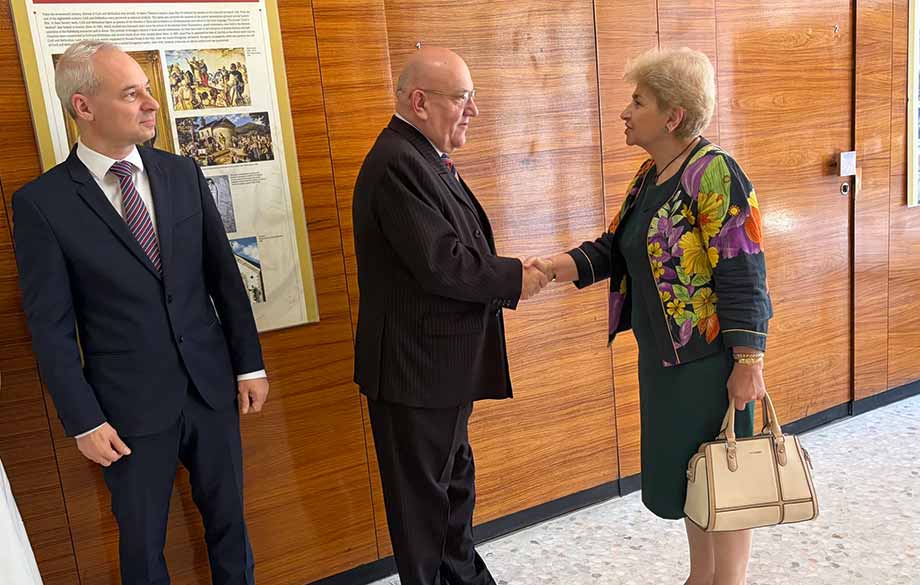
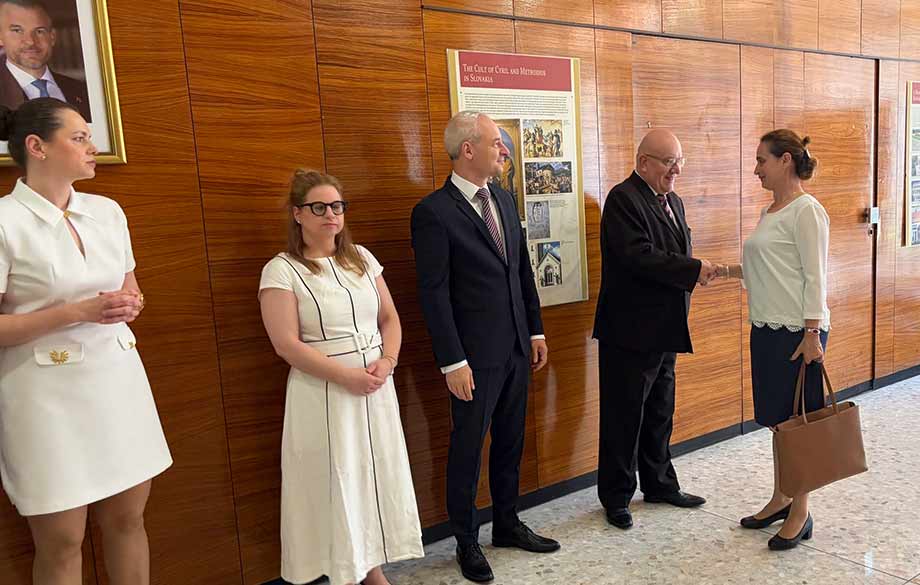
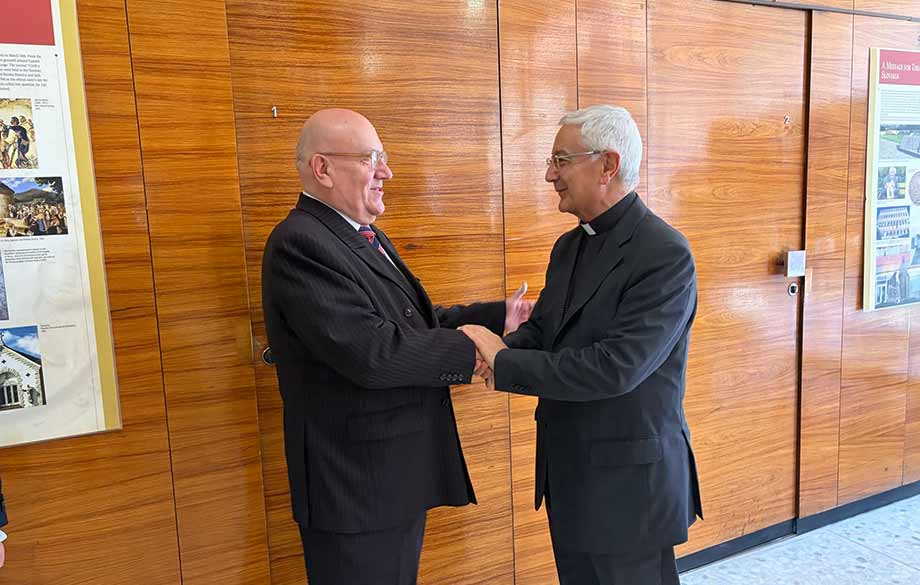
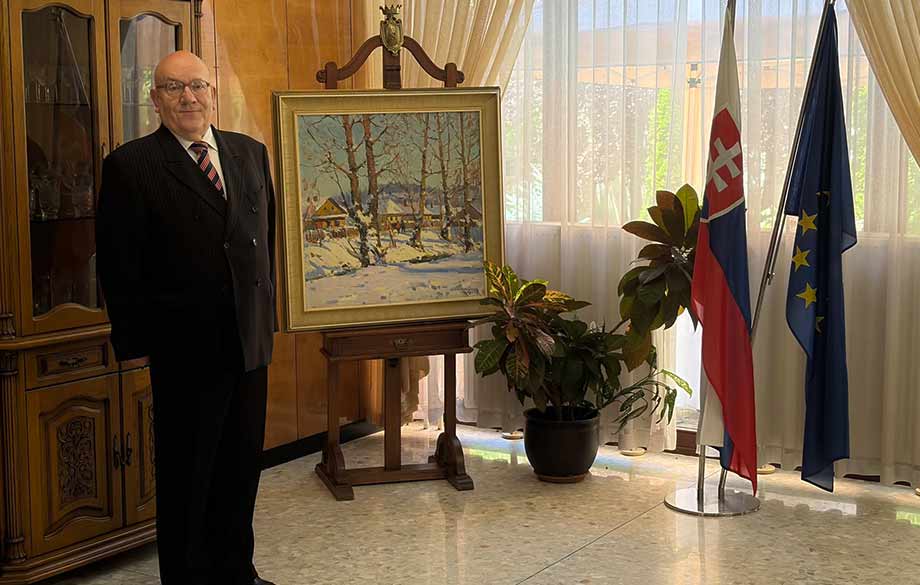
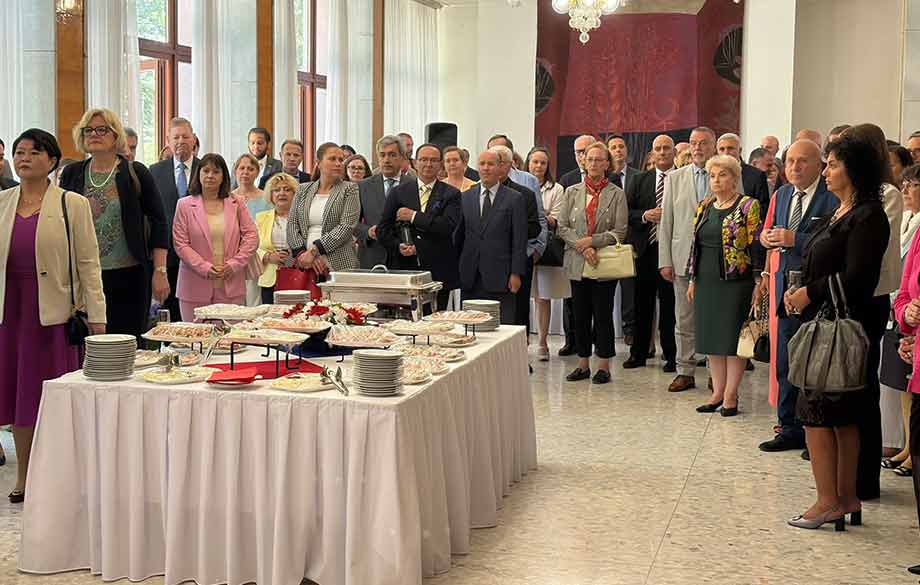
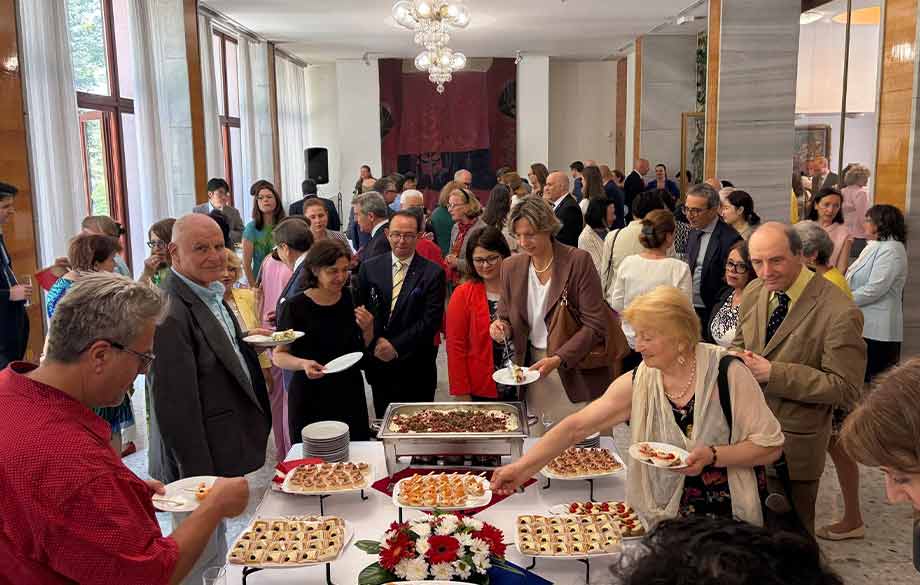
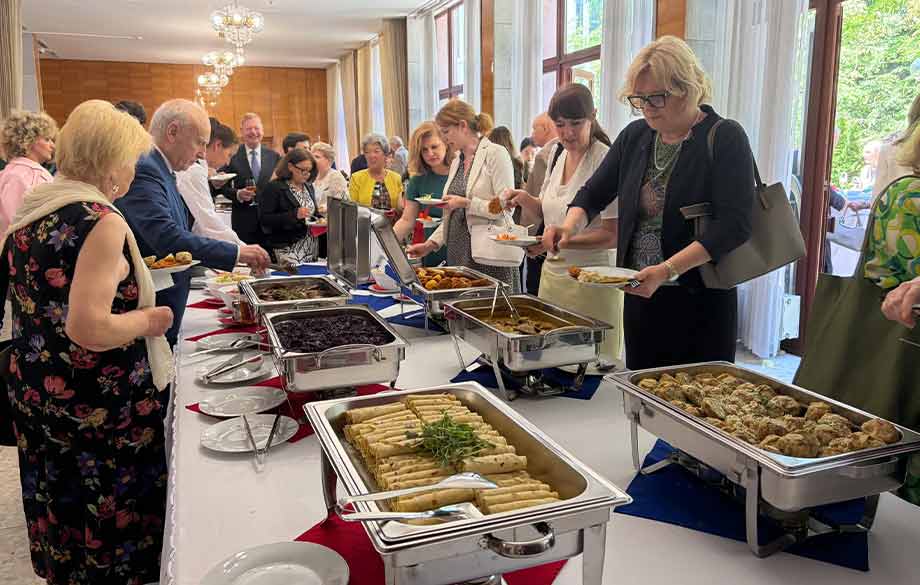
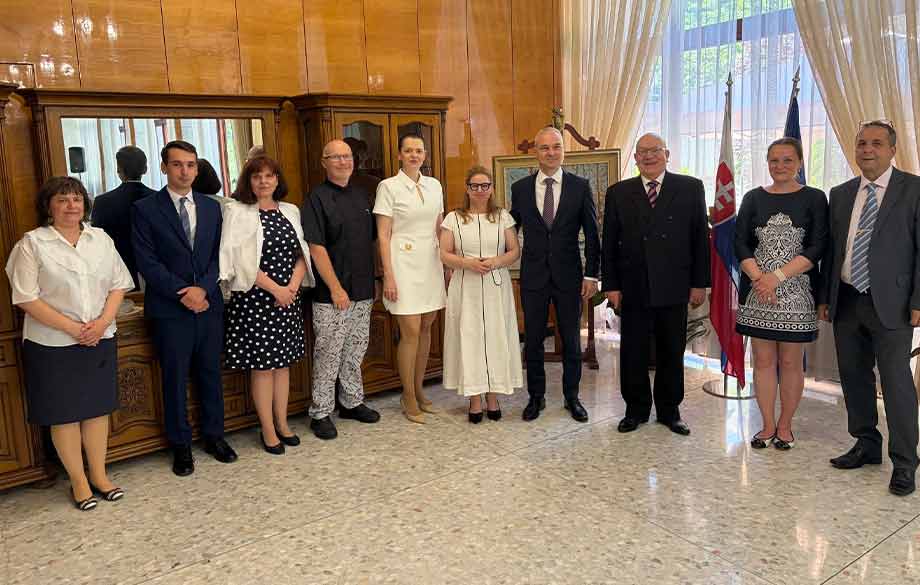
The photographs were provided by the Embassy of the Slovak Republic in the Republic of Bulgaria. Above: H.E. Mr. Vasil Grivna, Ambassador Extraordinary and Plenipotentiary of the Slovak Republic to the Republic of Bulgaria (right), and members of the embassy's diplomatic staff welcoming guests to the reception.


